Raw wildflower honey delivers its benefits because it joins two qualities in one jar: nectar gathered from many wild plants, and gentle handling that leaves the natural compounds in place. Sources credit it with usefulness for the skin, digestion, allergies, and everyday energy.
I like to begin with the jar rather than the claims. Overall, the benefit depends less on a flower list than on whether the honey was heated or mixed with other honeys, and experts cited across the sources keep returning to that point. In some regions the nectar comes from gallberry, palmetto, tulip poplar, and white holly, while mountain bees lean on rhododendron.
Demand for this honey has grown partly because it earns a place daily in plain cooking. A drizzle goes over salads, a dressing comes together with olive oil and vinegar, and a spoonful stirred into mustard makes a quick glaze.
Inside the body, the effect people notice first is a coating action along the esophagus and stomach lining, which the sources tie to relief from acid discomfort. The honey combines that gentle action with plant compounds from many blooms. For anyone who struggles to breathe comfortably through allergy season, raw wildflower honey from nearby fields is the usual suggestion, though sources describe a slow effect and not a cure.
Wildflower honey is honey made from nectar that bees gather from many wild plant species instead of one cultivated flower. It sits among the many honey varieties that people have treasured as a gift of nature, and the botanical mix behind it explains most of its character. That mix is the opposite of a monofloral honey built on a single plant.
Color and taste follow the flowers. A jar from Texas can taste nothing like one from Vermont, because different plants bloom in each place. Lighter jars trace back to fruit tree flowers, and medium-colored ones to prairie plants, while the shade itself runs from pale amber toward far deeper tones.
Look at the specific jar, not the category. A premium batch keeps the essence of its landscape, comes cleanly from the honeycomb, and, according to one producer, is more likely to be free from pesticides when it is gathered in remote areas. Hydrogen peroxide and a low pH are also credited for honey’s germ-fighting action.
Raw honey is honey that reaches the jar without high-temperature treatment or fine sieving, so it stays close to how it left the hives. The minimal handling is the whole point, and one source says only large bits of the hive are removed.
High temperatures are what cost a jar its value. Raw honey keeps the delicate compounds that processing damages, including trace amounts of other nutrients, which gives it a rich nutritional profile. It also keeps flavor notes with more intensity, and another source adds that its antimicrobial action holds up better too.
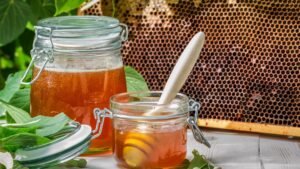
Appearance gives raw honey away. A jar can turn cloudy because suspended particles and air bubbles stay in it, and those specks act as nucleation points, so raw honey tends to crystallize sooner than treated honey. Some jars stay liquid for months, and one source treats the setting as a natural sign of real raw honey. A small jar can show the same effect. Taste follows the nectar: raw buckwheat honey tastes strong, while lighter sources taste gentler.
Wildflower honey changes from jar to jar because the plants in bloom change with place and time of year. Bees roam across meadows and forests, so one seasonal harvest can lean on dandelions and thistle while another leans on snapdragons and coneflowers.
Geography matters as much as the calendar. One producer contrasts honey from the Upper Himalayas in India with honey from the Carolina Hills in the US, where bees work a different mix. Regional climate shapes which plants flower, and that decides whether the foraging yields a light jar or a heavy one.
The scale of the work is large. A single bee visits roughly 50 to 100 flowers per collection trip, and about 2 million flower visits go into one pound of honey, according to figures from a public science source. The insect works across a wide and diverse set of plants, so two jars carrying the same label can still differ noticeably.
No. Wildflower honey names the flowers the bees visited, while raw honey names how the honey was handled after harvest, so a single jar can carry both labels. The confusion comes from shoppers treating two different terms as rivals.
| Question | Wildflower honey | Raw honey |
|---|---|---|
| What the word tells you | The flower source, usually polyfloral nectar | The treatment: unheated and unaltered |
| Can it be treated? | Yes; commercial jars may be heated and filtered | No; honey that was heated or fine-sieved no longer qualifies |
| Nectar behind it | Many wild plants | Any plant, including clover |
On handling, raw honey receives only a coarse pass through a mesh screen that removes debris such as bee parts and wax. One source notes that no heat above roughly 95°F, the natural temperature inside a beehive, ever touches it. That is why raw honey can come from a single-crop source as easily as from wildflowers.
Taste is where autumn shows up: wildflower honey gathered late in the year differs from an earlier jar, even from the same field. A jar tagged only “wildflower” says nothing about heat, so look for a single ingredient, honey, on the jar.
Raw wildflower honey offers a mix of germ-fighting action, digestive comfort, steady energy, and skin care, mostly because it keeps natural compounds that high temperatures remove.
Antioxidant content carries much of the story. One seller counts about 30 types of plant-based antioxidants in raw wildflower honey, and another source adds phenolic acids to the picture. The diversity of flower sources means more varied compounds, and sources credit propolis and glucose oxidase, live components that raw honey keeps. One source calls honey a powerhouse of natural goodness for the same reason.
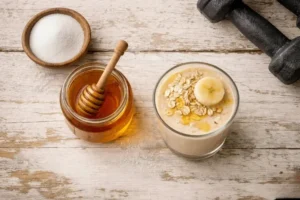
Energy is the benefit consumers feel fastest. Natural sugars give a quick lift while slow-release sugars last through the day, according to one source, which suggests a drizzle over breakfast cereal, or salt with honey as a pre-workout boost before the gym. Swapping that in for refined table sugar is the point of the advice.
Skin care leans on the honey’s thick body and its germ-fighting action. A DIY facial left on for 15-20 minutes before rinsing is the method one source describes, and another says the honey can support the body’s defenses. For allergy season, one source frames the idea as gentle exposure to nearby plant matter, not a guaranteed fix.
Wildflower honey is usually sold raw and carries a varied flavor, while regular supermarket honey is usually heated and sieved into one standard product.
| Point | Wildflower honey | Regular honey |
|---|---|---|
| Color | Light gold to deep brown, depending on the flowers | Often transparent, smooth, and light |
| Flavor | Varies with the flowers visited | Same taste jar after jar |
| Handling | Usually raw, with natural compounds intact | Usually heat-treated and sieved |
| Purity | No added sugars | May be cut with cheaper additions |
Rising bulk production pushed makers toward processing that extends shelf life and increases quantity, and one source says some producers add unhealthy extras. Compared with normal store-bought jars, wildflower honey is comparatively closer to what the bees made. Some producers also use ultrafiltration, and another source says the jar then stops saying “raw”.
One honey seller states that nearly 76% of honey sold in grocery stores is ultra-filtered, which removes traceable plant matter. Heating also raises hydroxymethylfurfural, which may have negative effects in large amounts. On the plus side, wildflower honey keeps its antibacterial action, and its low glycemic index and natural carbohydrates mean neither raw nor wildflower honey should cause a sugar slump.
Pick genuine raw wildflower honey by finding the words “raw” and “wildflower” together on the jar and confirming that honey is the only thing listed.
Standing in the honey aisle, a shelf of jars can look identical, and the labels do the real work. One source warns that vague words such as “natural” or “pure” prove little, and a misleading claim is easy to print. Be wary of an inexpensive jar that may be adulterated with extra additions.
Buying from trusted beekeepers is the shortcut, since authentic raw honey should list only honey. Ask when the honey was harvested and whether it was ever processed beyond a coarse sieve. A purchased jar sourced from one named place is easier to judge than a mixed-source mystery, and storage matters afterward, which the next section covers.
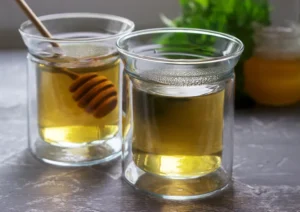
Raw wildflower honey works as a spread, a stirred-in sweetener, and a face mask, and the simplest uses are the ones people repeat. A tablespoon stirred into warm water or a hot drink is the classic move for a scratchy throat or a persistent cough, because the honey’s body forms a soothing coat, according to one source.
In the kitchen it is a sweet alternative to refined sugar in baking and sauces, and a pinch of fresh herbs pairs well with it in a glaze. Treat it as part of a wider wellness routine rather than a cure. For a radiant look, the facial method above is the one most often repeated. Storage is simple. One producer advises keeping the jar tightly sealed in a cool, dry, dark location, which protects the honey between uses.
No. Wildflower honey is a distinct, multifloral honey, while regular honey is a blended product that has usually been heated. Commercial heat treatment reaches 145°F or higher, which deactivates live compounds, and the heat also kills yeast cells that can affect taste, according to two sources. The result looks clearer and feels smoother, with a uniform flavor that lacks subtle notes. Studies cited by one source found some jars labeled honey contain other additions, which implies that appearance alone proves little, regardless of how pure a jar looks.
No. Wildflower honey tastes more varied than regular honey, and the difference shows up from jar to jar. Regular honey is consistent and neutral, while wildflower honey is unpredictable: a spring jar can carry notes of orange blossoms and lavender, and a summer jar can turn earthy. Darker jars tend toward a robust, bold taste, according to one source. The word wildflower refers to the mix of flowers, so the options run from light and gentle to deep and intense.
Wildflower honey is special because its nectar comes from a broad range of wild plants, from late-season goldenrod and aster to many others. Both the plant variety and the gentle handling matter: raw wildflower honey keeps enzymes, proteins, vitamins, and minerals that high temperatures reduce. Its flavonoids help counter oxidative stress, and one source notes that each wildflower species adds different compounds. Another source says honey applied to a wound supports healing, and purity, meaning no added sugars, is what keeps these qualities preserved.
Yes, sources describe raw wildflower honey as generally good for health, though the benefit depends on the type of jar. Raw honey keeps live compounds such as diastase and invertase, and one source says its natural prebiotics feed gut bacteria. Another links it to stronger immune defenses and relief from indigestion and acid reflux, and describes a DIY facial against acne and blemishes. Stirring it into oatmeal or yoghurt is an easy, healthier choice than sugar.
No. Wildflower names the nectar source, so the designation can coexist with raw or with heated honey. Raw honey is unfiltered apart from coarse straining, and honey that is pasteurized or fine-sieved cannot legitimately carry the raw label. A heavily treated jar may also hide additives and sweeteners, such as high fructose corn syrup and brown rice equivalents, according to one source, which is why the best pick is a jar labeled raw and wildflower together.
Neither wins outright: raw describes how honey was treated, wildflower describes where the nectar came from, and the strongest jar is raw wildflower honey. That combination gives complex, layered, floral flavor alongside the natural compounds raw handling protects. Flavor matches the season, so batches vary, and mild or strong nuances show up even on plain toast. One source advises buying from vendors with a good reputation and strong reviews.
Raw wildflower honey from nearby fields may ease allergy season for some people, though sources present this as a theory and not a proven treatment. Raw honey carries tiny grains of pollen from nearby plants, and the idea is that repeated contact builds tolerance and may decrease sensitivity over time, much like immunotherapy. It only works if the honey comes from your geographic area and from local sellers who can tell you where it was gathered. Mix it into warm milk or herbal tea such as jasmine, chamomile, or peppermint. Anyone with a known allergy to these plants should be careful, because even minute amounts can trigger a reaction.