
Shilajit is not manufactured from scratch: it is a natural exudate that seeps out of mountain rock, and makers only clean, extract, purify, concentrate, test, and pack it. Its Sanskrit name, Shilajatu, is built from Sanskrit words usually explained as “rock” and a lac-like gum, which already hints that the material is harvested, not built.
Raw lumps arrive carrying sand particles and other debris, so no careful maker treats the harvest as a finished product. Dissolving the soluble compounds in water is the pivot of the process. Everything after it, from multi-stage filtering to the traditional purification called Shodhana, exists to protect the active ingredients while removing what does not belong.
The final extract is screened for heavy metals and then sealed into dark glass jars. The usual order is:
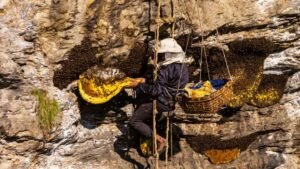
Shilajit is a dark, mineral-rich substance that forms when ancient plant matter breaks down under mountain pressure and later oozes out of rock. Producers who harvest in the Himalayas report that it appears mainly above 12,000 feet, which is why collecting it is slow and risky.
Its age is disputed. One producer says shilajit was formed over 4,000 years ago, while another source describes a much shorter formation period, so any exact age figure deserves caution.
Reaching a deposit means a trek of 2-3 days. Collectors then work with little more than a rope and a chisel, prying hardened material off the cliff. Harvest happens twice a year, in spring and autumn, because snow buries the deposits through winter.
Raw shilajit is sourced from mountain cliffs, and producers agree that final quality depends heavily on how well this first stage is handled. Careless procurement leads to lower purity, higher contamination risk, and an unreliable end product.
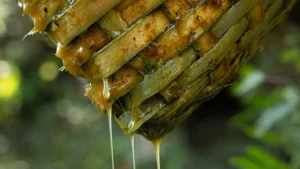
The material seeps as a tar-like mass out of rock crevices during the warmer months, which is when collectors move in. Location matters as well: one producer sources only from the Paddar Valley in Jammu & Kashmir.
Working with local extractors and traditional Ayurvedic practitioners is one way producers reduce uncertainty about where a lot came from. It does not replace laboratory proof, but it gives the buyer a starting point.
Raw shilajit is inspected on arrival, and any lot that fails the maker’s own checks is rejected before production begins. The inspection actually starts earlier, with the suppliers, their harvesting techniques, a pre-collection assessment of the deposit, and evidence of sustainable collection.
Producers also stress sourcing ethically, partly because the market contains imitation and counterfeit product. Tracing a lot back to a known collector is therefore the first line of defense, though that is an observation and not a tested rule.
On the bench, the inspector looks for what should not be there. Unprocessed lumps typically carry dust, plant residues, and rock pieces, and each lot is evaluated before it moves into production.
Cleaning removes visible impurities from raw shilajit, and a soak then loosens the rest so it can be separated later. This stage exists because raw shilajit is not meant for direct consumption.
Makers judge a sample by appearance, color, and fragrance. Observations like these resemble home tests and are only rough guides, since a laboratory has to confirm purity.
Soaking in purified water lets useful material dissolve, while insoluble matter settles out and can be removed. The cleaning is repeated until the liquid shows no visible debris.
Water extraction moves the beneficial part of cleaned shilajit into a liquid while undesired components stay behind. The method is solvent-free, relying on water alone, and water solubility decides what ends up in the liquid.
Cleaning has already removed stones, so the water works on material that actually goes into solution. Literature reports organic acids, chromoproteins, and other bioactive fractions in this fraction.
Extraction efficiency, the share of starting material that ends up in the liquid, is one measure of how well the step worked. It also affects how repeatable the process is from one run to the next.
Shilajit liquid is filtered several times because each pass removes finer particles than the one before. Some producers first soak the raw material in alkaline water, then strain the liquid through fabric and move it between extraction vessels until the debris is gone.
Filtration deals with physical contaminants such as leftover plant fiber and fragments. It is slow, but it is the only way to take them out of the liquid.
Filtration does not replace biological testing. A separate microbial screen looks for yeast and molds, which a cloth cannot catch.
Ayurvedic purification is the traditional step that removes impurities from raw shilajit before it is taken. Classical texts such as the Charaka Samhita and the Rasa Shastra literature discuss shilajit and its purification, which places the step well within established tradition.
Two traditional variants are named in that literature: Suryatapi, which relies on sunlight, and Agnitapi, which relies on fire or heat. Both aim to strip fine impurities from the extract — wait.
Ayurvedic purification is the traditional step that removes impurities from raw shilajit before it is taken. Classical texts such as the Charaka Samhita and the Rasa Shastra literature discuss shilajit and its purification, which places the step well within established tradition.
Two traditional variants are named in that literature: Suryatapi, which relies on sunlight, and Agnitapi, which relies on fire or heat. Both aim to clear fine impurities from the material and prepare it for later standardization.
One producer describes a routine that can be followed in three steps:
Concentration removes water from purified shilajit liquid until a thick extract remains. Traditional producers use sun-processed drying, with one producer leaving the soaked material in sunlight for about 3 hours, while others prefer heat-processed methods.
Modern facilities may use vacuum evaporation or a rotary evaporator, which boils off water at a low-temperature and limits thermal degradation of heat-sensitive compounds. This is general industry practice, not something the competitor sources describe.
As water leaves, the liquid turns semi-liquid and can later be dried to a water-soluble powder. Controlled agitation earlier in the process helps the result stay even, and stability tests show how the finished extract holds up.
Standardizing shilajit means measuring marker compounds in each lot so that every lot meets one specification. Makers use laboratory assay methods, and the literature reports dibenzo-alpha-pyrones (DBPs) among the compounds of interest.
Without standardization, two lots can differ widely even when they look identical. A fixed specification is what lets a producer promise the same product twice.
Once the extract is standardized, it supports dose accuracy across capsules, tablets, a powder form, and custom formulas built to a brand’s brief.
Laboratory testing screens each shilajit lot for toxic residue, organisms, authenticity, keeping quality, and purity before release, and a failing lot is discarded. Shilajit forms from plant matter and microbial life trapped in rock, so biological checks matter.
Labs may also report ash content, trace elements, and a phytochemical profile, and they can separate a true extract from a lookalike such as bitumen. The bitumen point is general knowledge and is flagged below.
A reputable lot arrives with a certificate of analysis from a third-party lab, and the lab report should be tied to the lot through batch traceability. Producers add hygiene controls such as sterilized tools, and raw shilajit must be freed of impurities before human use.
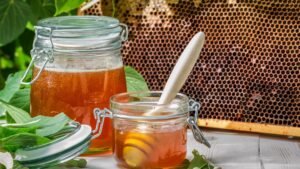
An approved extract is converted into a traditional resin or a dried form and then sealed into suitable packs. Careful pre-processing pays off here, since a cleaner extract holds up better in every format.
Drying choices shape the end product: spray drying and freeze drying turn extract into a dry solid, and stability in each format depends on moisture. These are general techniques, not steps the competitor sources describe.
Pack options include HDPE containers, blister packages, and pouches. The finished product remains a processed natural extract, not a laboratory-made or artificial compound.
Finished shilajit is packed in sealed, hygienic containers and stored under managed conditions so it stays usable through its shelf life. Good packaging keeps the moisture level low and helps with preserving the product’s quality.
Format affects handling. Capsules rate higher than the traditional form for convenience and portability, and some brands sell under private label packs.
Each pack should carry a batch number, honest label claims, and clear label directions, and the production batches behind it should be traceable.
Traditional treatment of shilajit follows time-honored steps of soaking, straining, and drying rather than any chemical synthesis. In Ayurveda, shilajit sits within a holistic system, and Tibetan and Chinese practice and wider folk medicine also mention it.
Names vary by region. English texts sometimes call it mineral pitch, while Russian and Central Asian sources call it mumijo.
Producers who follow age-old methods say these routines protect mineral content. That is a producer claim, not a tested result.
Shilajit is processed mainly for its fulvic acid, humic compounds, and mineral content. One producer credits it with over 85 minerals, a figure that comes from the producer and is not independently verified here.
Because the mineral composition varies by deposit, makers track the percentage of key markers in each lot. A claim of strong potency means little without such numbers.
Processing choices affect these constituents. Gentle handling helps keep the mineral balance intact, while harsh treatment may damage heat-sensitive material.
Drying method changes shilajit quality mainly through temperature, duration, and exposure to light, so the choice matters. Open natural drying on stainless steel trays under the sun is a traditional approach, and it is simple but hard to standardize.
The measure that shows whether drying worked is water content. Excess water shortens keeping time and invites microbial growth, which is why makers monitor it.
Consistent duration and temperature control also deliver batch uniformity. That is the main reason industrial lines favor measured drying over weather-dependent methods, though this is an inference.
Shilajit differs between regions because plant matter, rock, and decomposition conditions differ from one mountain range to another. Two lots can therefore differ even before any processing starts.
Shilajit is reported in India, Tibet, Russia, and parts of Chile. One producer considers the Himalayan material the most potent for its mineral content, which is a producer claim.
Slow breakdown over hundreds of years shapes each deposit, and sources disagree on age. Deposits in the Pir Panjal Range are one example producers cite, and this variation is why standardization matters.
Purified shilajit differs from raw shilajit mainly in purity control, safety screening, and depth of testing.
| Parameter | Raw Shilajit | Purified Shilajit |
|---|---|---|
| Purity | Varies lot to lot | Held to a specification |
| Safety | Not assured | Screened |
| Contaminants | Possible | Monitored |
| Testing | Limited | Extensive |
| Ready to take | No | Yes |
Raw material can be adulterated, so purification and testing give a measurable safety margin. People who take it should still ask a healthcare professional about possible adverse effects.
Filtration shows the visible difference: liquid that runs completely clear gives better clarity in the extract. Consistency from lot to lot is what earns customer trust.
No, shilajit cannot be made synthetically in any way that matches the natural material, because the product depends on slow processes in rock. The geology, the rock type, the altitude, and decaying plant matter that becomes humus cannot be reproduced in a factory.
Factories do make fakes. One producer reports products labeled shilajit that contain coal, chemical additives, and synthetic fillers. Testing for synthetic additives is one reason lab documents matter.
A genuine shilajit product is best confirmed by documented laboratory testing, not by look or feel. A comprehensive report should include identity tests and results against the maker’s internal quality standards, and the product should be standardized with contaminants controlled.
Appearance is a weak guide because regional variation gives a wide color range and different texture. Origin names such as Altai or Caucasus do not guarantee quality either.
Raw shilajit is not consumer ready, and producers advise against eating it as dug from the rock. Its safety margin is lower because quality is variable, and the risks include metals such as lead, mercury, arsenic, and cadmium, which testing is meant to catch. Purified, tested extract carries a higher margin of safety.
Shilajit resin differs between lots mainly because of drying degree, which sets how soft or firm the final product feels. A lightly dried lot stays pliable and glossy with noticeable stickiness, while a more dried lot turns brittle with more hardness. The shade runs from dark brown to nearly black.
Warm temperatures soften resin and make it tacky, so storage matters. Keep it away from direct sunlight and in low humidity, ideally in UV-protected containers and climate-controlled rooms. A change in texture alone is not proof of a problem, but ask for the lab report if you are unsure.